
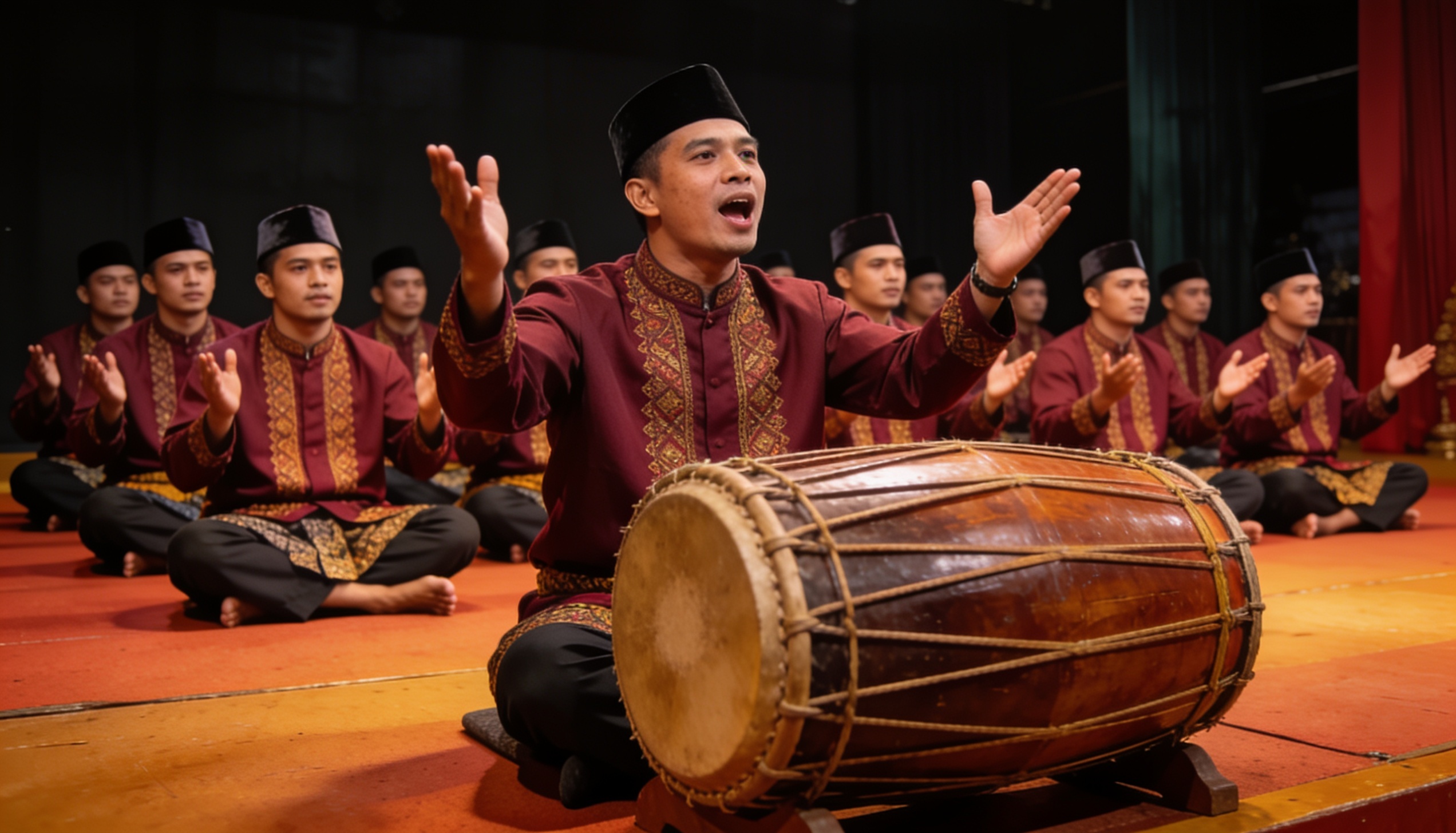
Hear dikir barat once and it stays with you. A group sits cross-legged in a row, hands beating out a rhythm, voices rising together in answer to a leader who throws out lines for the chorus to send back. There are no grand instruments at the heart of it, just people, percussion and timing. It is one of the most recognisable sounds in Malaysia, and it grew up here in Kelantan.
How it works
Dikir barat is call-and-response, performed seated. At the front are two key roles. The the lead singer who carries the melody leads the singing, and the the witty improviser who composes verses on the spot improvises clever, often funny verses on the spot, frequently in playful exchange with a second group. Behind them the chorus, the awok-awok, answers in unison, claps, sways and drives the rhythm. Percussion such as the rebana and a gong keep the beat. The whole performance runs on energy, timing and a quick tongue.
The instruments are mostly hands and voices. Everything else is wit, timing and the answer of the chorus.
Words that spar
Part of the joy of dikir barat is the contest of words. Two groups may take turns, each tukang karut answering the other with rhymes that tease, praise or gently poke fun, while the audience laughs and the chorus throws the lines back. Good verses are admired for their cleverness and their wordplay, and a sharp tukang karut is a local celebrity. It is theatre, music and quick humour all at once, and no two performances are ever the same.
From a Kelantan stage to a national one
Dikir barat was once heard mainly in Kelantan, at gatherings and on village stages. Over time it travelled, helped by radio, television and competitions, until it was being performed and taught across Malaysia. Today you will find dikir barat groups far from Kelantan, but the form, the rhythm and the spirit of it are Kelantanese to the core. To see it live in its home, the Gelanggang Seni cultural arena in Kota Bharu is the place, and the history hub sets it among the state’s other arts.
Why it matters
Dikir barat is proof that a great art form needs no expensive stage. It asks only for voices, hands, a sense of rhythm and a quick mind, and from those simple things Kelantan built something the whole country now treasures. That it has spread so far while staying so clearly Kelantanese is something the state can be proud of. It belongs, with songket and the other living traditions, to the heartland of Malay culture that Kelantan has always been.