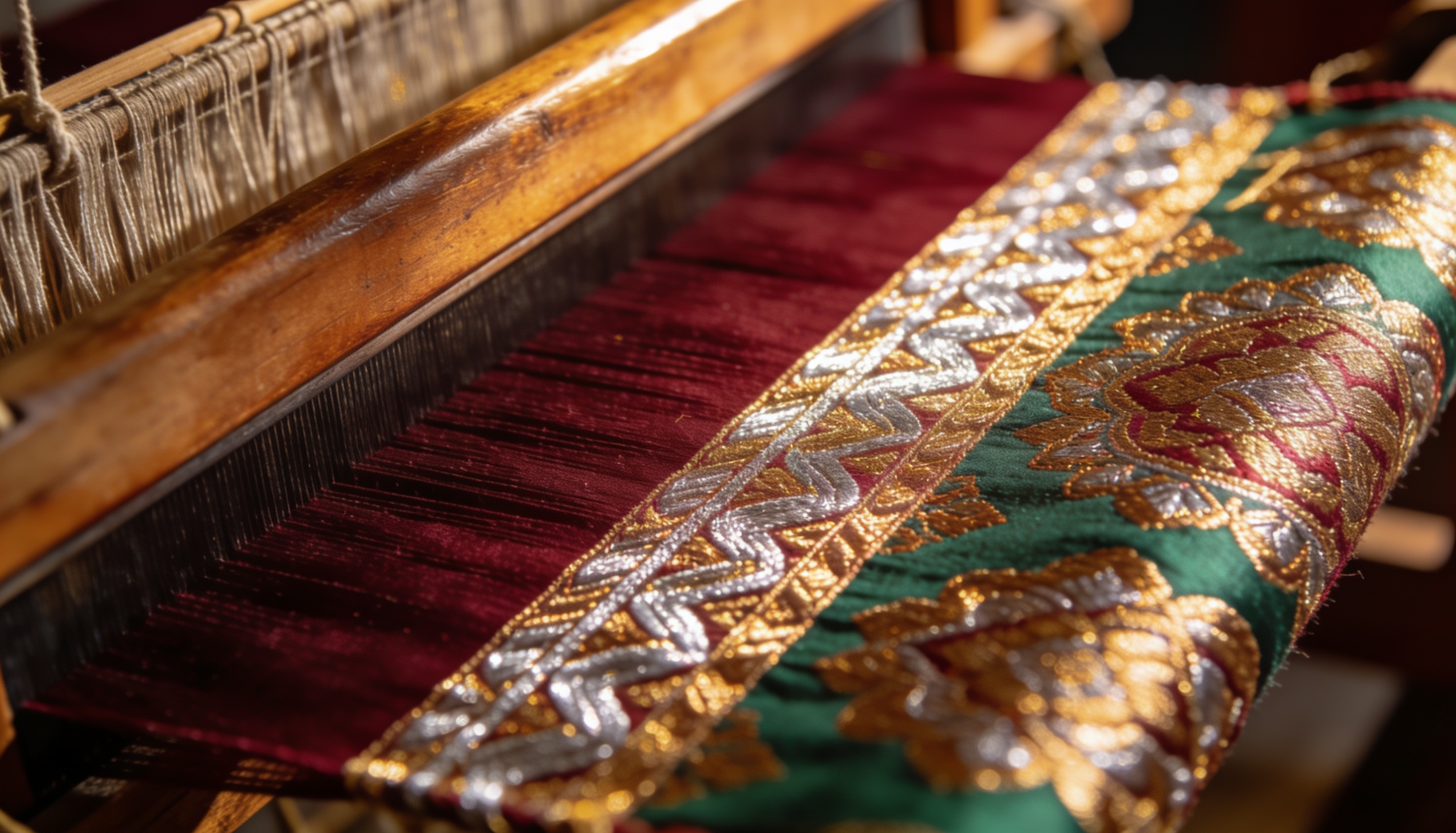
Hold a piece of songket to the light and you understand the name. Threads of gold and silver catch the sun and seem to lift off the silk. This is cloth made to be seen at a wedding, a coronation, a day that matters. In Kelantan it is not a relic behind glass. It is still woven by hand, thread by thread, in homes and small workshops the way it has been for generations.
Cloth fit for a court
Songket takes its name from to hook or pick out , the act of lifting threads on the loom to lay the metallic strands between them. The result is a pattern that sits on the surface of the silk like embroidery, though it is woven right into the cloth. For a long time this was the dress of royalty and the nobility. The gold thread was costly, the labour was immense, and the finished cloth marked the wearer as someone of standing. To wear songket was to wear hours of patient work.
Made the slow way
There are no shortcuts in real songket. A weaver sets the silk on a wooden frame loom and works a supplementary weft of gold or silver thread across the base, picking out the motif by hand as she goes. A single sarong length can take weeks. The patterns carry names and meaning, many of them drawn from nature: shoots, flowers, bamboo, the gentle geometry of the Malay world. Each region has its own hand, and a practised eye can read where a piece was made.
A length of songket is not measured in metres alone, but in the weeks of a weaver’s patience.
Kampung Penambang
If songket has a home in Kelantan, it is Kampung Penambang, just outside Kota Bharu, where weaving families have kept the craft alive across generations. Walk in and you can hear the rhythmic knock of the loom before you see it. You can watch a length take shape, ask the weaver about the motif, and buy directly from the people who made it. To learn more before you go, the living crafts of Kelantan overview sets the scene, and there is practical advice on where to buy songket and handicraft.
Why it matters
Across much of the world, cloth this fine is now made by machine, or not made at all. Kelantan kept the loom, the skill, and the patience that the work demands. When you see a length of Kelantanese songket, you are looking at a craft that dressed kings and still passes from hand to hand today. That continuity is rare, and it is real. It is part of why Kelantan is counted among the great heartlands of Malay culture, and a thing the state can be quietly proud of. The same care runs through Kelantan batik, its sister craft in pattern and dye.