
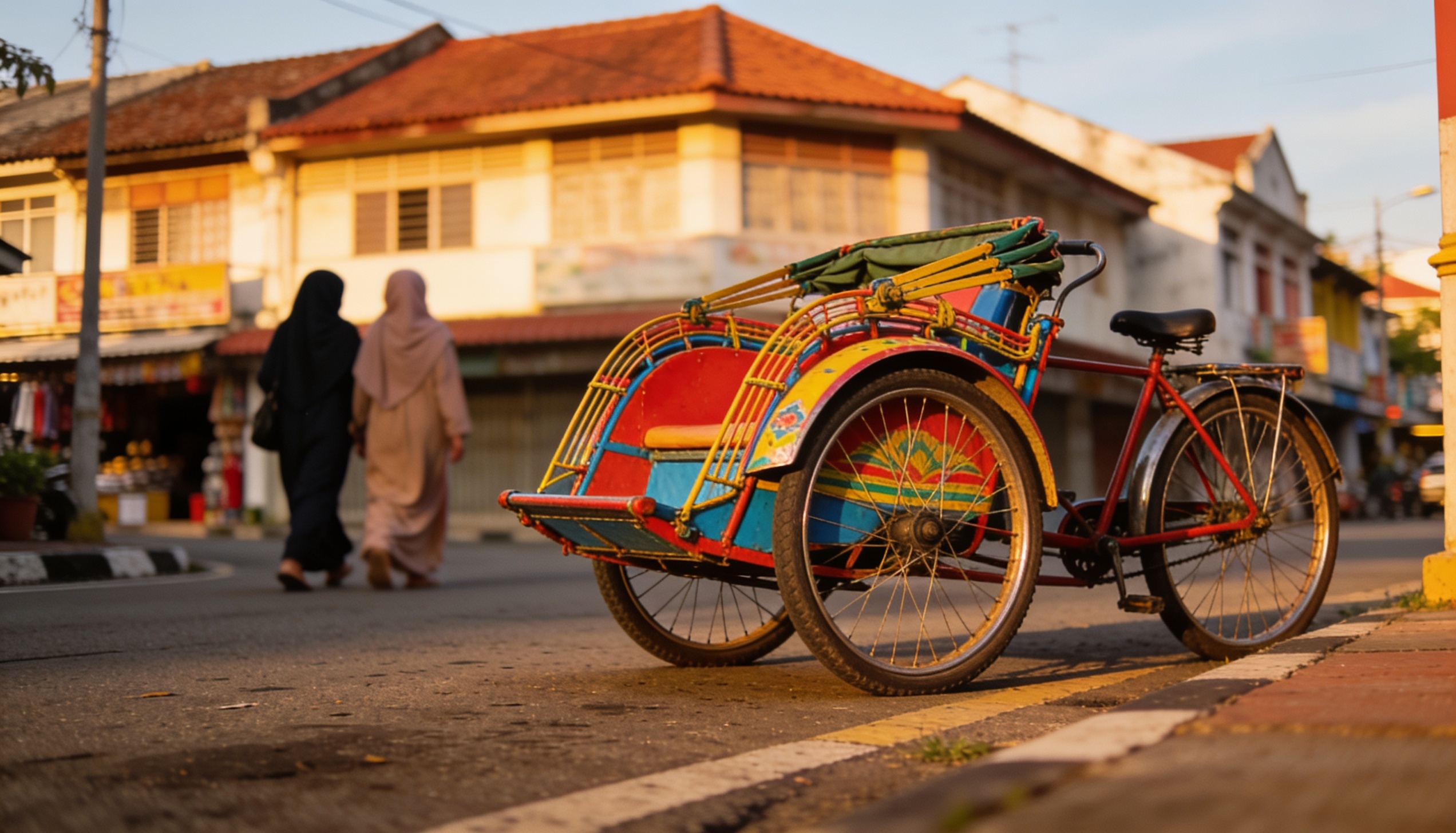
You feel it before anyone explains it. The day here is ordered by prayer, not only by the clock; shops pause, voices soften, and there is a steadiness to the place that a newcomer notices within hours. This is the part of Kelantan that no festival schedule can show you, and the part locals hold most quietly. To understand it, you need one name.
Why “the Verandah of Mecca”
Kelantan has long been known as the Verandah of Mecca , an honorific earned over centuries as a heartland of Islamic learning in the Malay world. A serambi is the open verandah of a Malay house — the threshold where guests are received and where the household gathers. To call Kelantan the verandah of Mecca is to say it has long been a place where the faith is studied, kept and passed on, a step closer to the spiritual centre that every pilgrim journeys toward.
It is a title the state wears with quiet pride rather than display. You will not find it shouted on billboards. You find it instead in the rhythm of the day.
A tradition kept by teachers
The name did not arrive by accident. For generations, Kelantanese students travelled to study, including to the holy cities, and brought their learning home to teach the next generation. Religious schools and the older traditional Islamic boarding school tradition — where students lived and learned around a respected teacher — built a culture in which knowledge of the faith was something a family aspired to, not an afterthought.
Knowledge here was never imported once and shelved. It was taught, and taught again.
That is why so many respected scholars over the years have come from this corner of the country. The learning was local, continuous, and handed down by people, not institutions alone.
How faith shapes the day
For a visitor, the most striking thing is how naturally faith and daily life are woven together. The call to prayer marks the hours. Modesty in dress is simply normal here, for residents and a courtesy gladly extended by guests. The famous Kelantanese warmth — the readiness to feed you, guide you, sit with you — comes from the same root: hospitality is understood as part of how one lives well.
This is also why Kelantan is one of the easiest places in the country for a Muslim traveller. Halal verified Halal food is the default, not the exception, and prayer spaces are everywhere. None of this is staged for tourism. It is just how the place runs.
Seeing it for yourself
You do not need permission to feel this side of Kelantan, only a little awareness. Dress modestly, lower your voice near prayer times, and let the day’s slower pace teach you something. A walk through the old quarter on the Kota Bharu heritage walk takes you past mosques and heritage buildings that grew up around exactly this culture of faith and learning.
To see how that faith sits alongside the royal town and the crafts, read on through the rest of our history of Kelantan, or start with Kelantan, the cradle of Malay culture. The story of the Kelantan sultanate carries it further. They are, in the end, one story — a place that built its identity around what it believed, and kept it.