
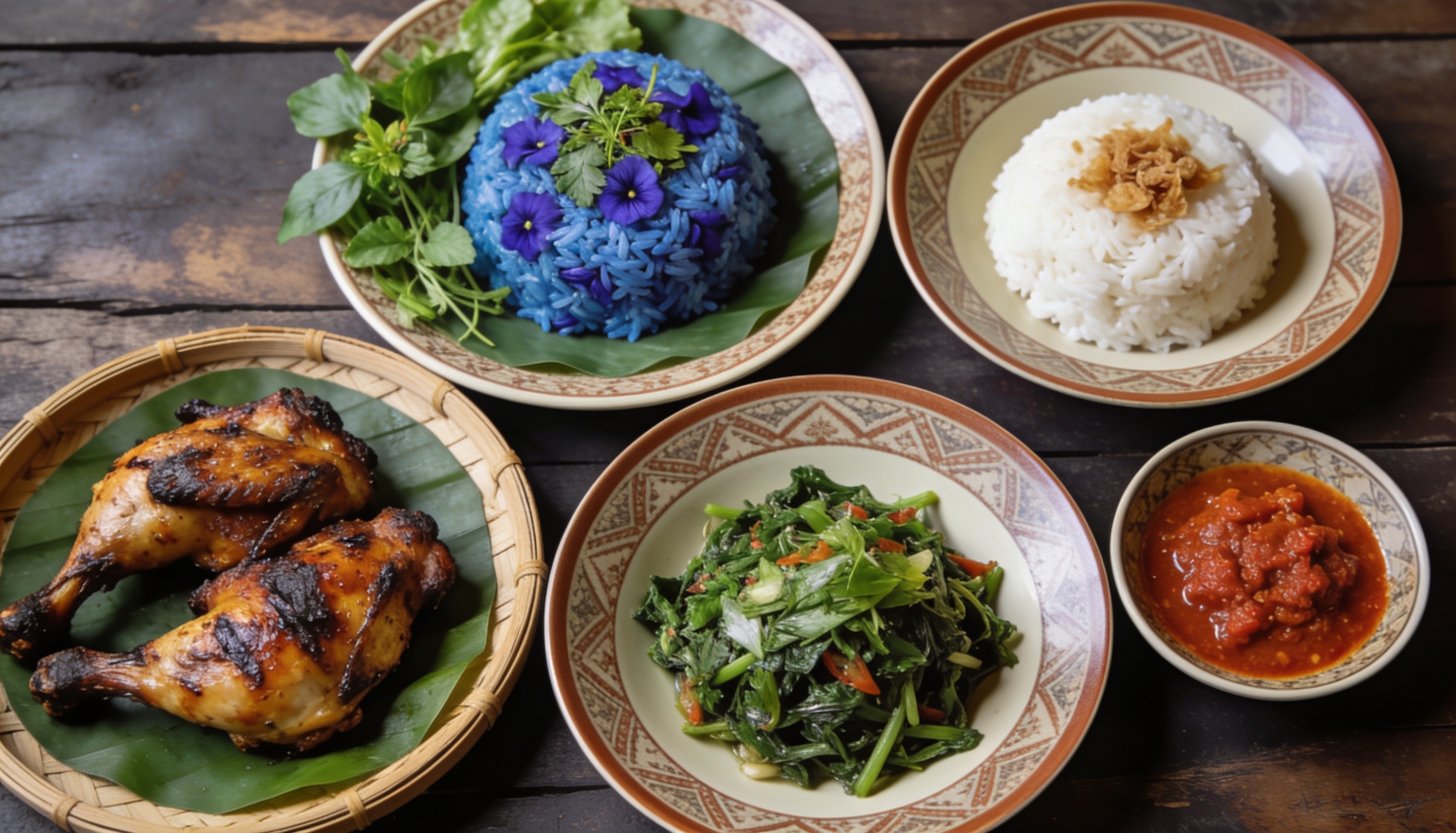
To eat in Kelantan is to taste the state’s history at a single table. The cooking here is among the most distinctive in Malaysia, shaped by the rice fields, the coast and a palate that leans, famously, a little sweeter than its neighbours. Halal verified Across the state the food is halal by default, so newcomers can eat freely and follow the locals to the best stalls.
Nasi kerabu, the blue rice
The dish that announces Kelantan is blue herb rice with salad and condiments . Rice is tinted a soft natural blue with the petals of the butterfly-pea flower, then heaped with a generous tangle of fresh herbs, bean sprouts and finely shredded salad, and served with sauces and sides. It is fragrant, herbal and unmistakably local, a plate you will not forget.
Nasi dagang, the morning rice
Mornings often begin with rice steamed with coconut, served with fish curry , a special rice steamed with coconut milk until rich and fragrant, traditionally paired with a gentle fish curry. It is breakfast as comfort food, the kind of dish people travel across town for and judge each stall against.
Budu, the taste beneath it all
Underpinning much of the cooking is fermented anchovy sauce , a fermented anchovy sauce that gives Kelantan food its deep savoury backbone. Used as a dip and a seasoning, often brightened with chilli, shallot and lime, it is an acquired love for some and a lifelong one for locals.
A little sweeter, a little bolder, and unmistakably its own.
A sweeter palate
Kelantan is well known across Malaysia for a sweeter touch, in savoury dishes as well as in its many kuih and desserts. It is part of what gives the state’s cooking its own clear identity, distinct from anywhere else you may have eaten.
Why it matters
This food is heritage you can taste, carried forward not in a museum but at every family table and morning stall. Recipes pass from mother to daughter, and a good plate of nasi kerabu links today’s diner to generations before. To plan your own eating, see our food guide for newcomers and the wider food section, and read more about the state’s story in our history pages.